Gear Guide
Blue vs Black: Two SC-5 VCA Compressors, and When to Use Each

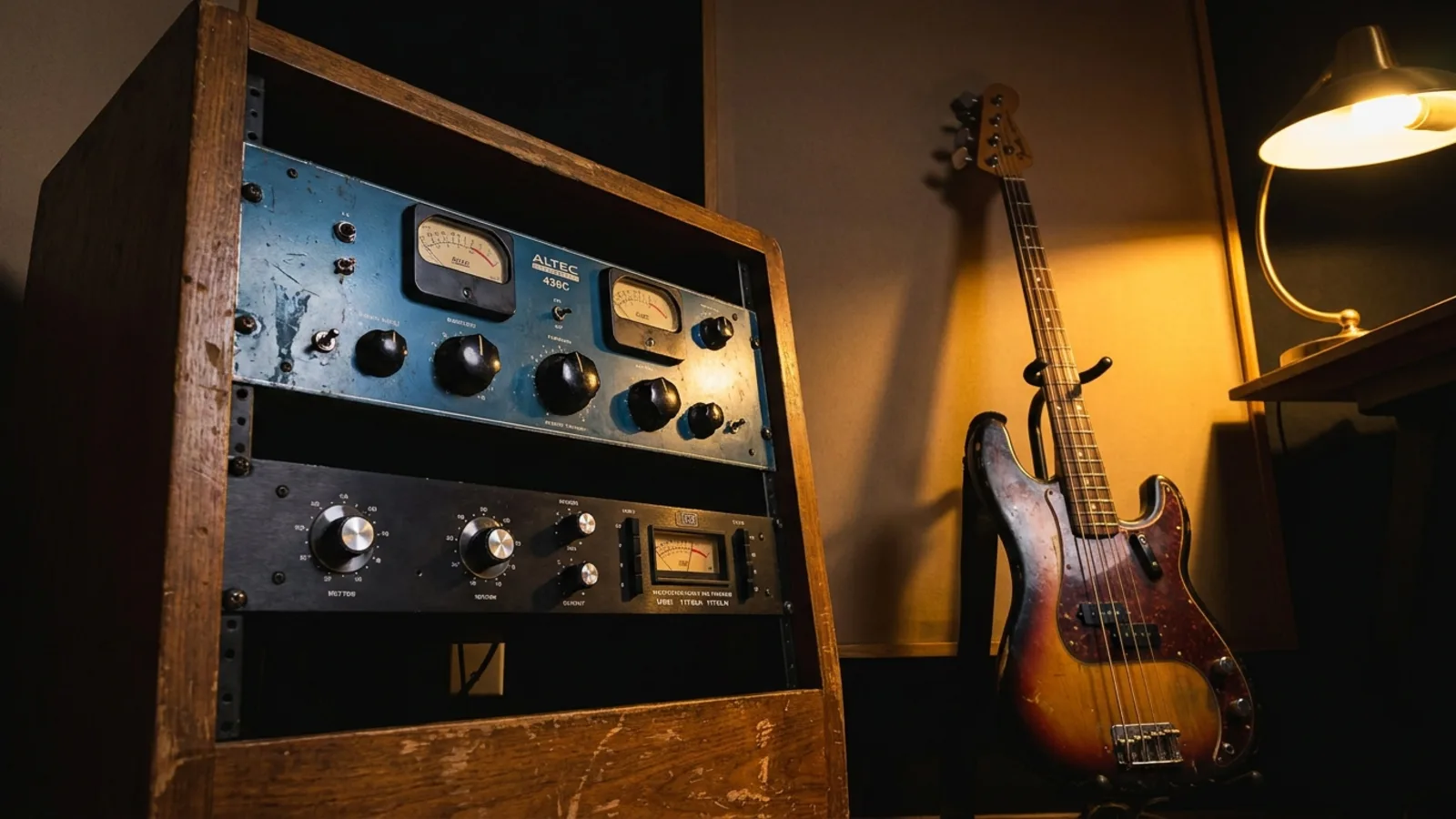
There's a moment on almost every drum mix where the room is nearly right but the snare keeps ducking under the kit, or the bus needs a hand to feel solid without going flat. That's the job I keep coming back to a VCA compressor for. It grabs, it lets go quick, it tightens things up. And in our shop that job usually lands on one of two plugins that look like siblings and sound like cousins: the BlueAsh SC-5 and the BlackAsh SC-5.
They come from the same lineage — the Ashly SC-50, a compressor that quietly ended up on a lot of records without ever becoming a legend. We modelled two eras of it. This is where they split, and how I decide which one goes on the insert.
What a VCA comp is actually for
A VCA compressor plugin lives in a different lane than an opto or a vari-mu. Where an LA-2A rides a vocal slowly and forgives you, a VCA reacts fast and does exactly what the knobs say. That precision is the point. You get real attack and release control, ratios that mean something, and a grip that clamps a transient before it gets away from you.
So it's the tool for snap and control. Individual drums, the drum bus, the whole mix bus, a bass that won't sit still. Anywhere you want the dynamics tamed on purpose rather than gently massaged. If I need a kick to punch through and stay put, or a stereo bus to feel glued and forward, I'm reaching for a VCA before anything else.
Feedback VCA, and why these two feel a little slower
Here's the part that matters and rarely gets explained. Both SC-5 plugins use a feedback VCA topology, not the feedforward design you'll find in most modern compressors.
The difference is where the detector listens. In a feedforward comp, the sidechain watches the input and decides the gain reduction before the signal passes through. Fast, surgical, a bit clinical. In a feedback design, the detector listens to the output — the already-compressed signal — and feeds that back to set the gain. It's a loop chasing its own tail, so it can never quite react instantly. It eases in.
That lag is a feature. Feedback compression tends to be smoother and more musical, with a softer knee that you didn't dial in on purpose. Transients aren't clamped stone dead; a little of the initial hit slips through before the VCA catches up. On drums that reads as life. On a bus it reads as cohesion instead of squash. It's slower than a modern VCA, yes, but slower in the way that flatters most sources rather than the way that loses control.
BlueAsh SC-5: the 70s blue face
The BlueAsh SC-5 models the earlier, blue-faced Ashly. Pure feedback VCA, and honestly the more straightforward of the pair. What you get is that smooth feedback character with no distractions — set your threshold, ratio, attack and release, and let it work.
I lean on the BlueAsh when I want the sound and none of the routing. Drum bus is the obvious home. A couple of dB of reduction, medium attack so the stick still cracks through, a release that breathes with the tempo, and the kit tightens into one thing instead of five. It's also lovely across a rough mix bus early on, just to hear how the whole thing wants to hang together. The blue-face tuning is a touch rounder and warmer to my ear, which suits material that's already a bit spiky.
If you want one VCA that does the classic jobs and gets out of the way, this is the one I'd start on.
BlackAsh SC-5: the 80s black face, plus a sidechain input
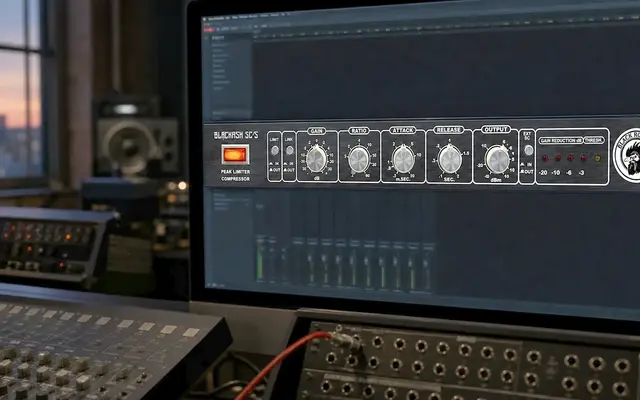
The BlackAsh SC-5 models the later black-faced revision. Same feedback VCA heart, so you keep that smooth, slightly unhurried grab. But this one adds the thing that changes what you can do with it: an external sidechain input.
That single feature is why the BlackAsh often wins the insert slot even when the two would sound near-identical on a static source. Feed the detector from something other than the signal it's compressing, and a plain compressor becomes a shaping tool.
Ducking
The classic move. Put the BlackAsh on a synth pad or a wash of reverb, feed the kick into its sidechain, and the pad steps back a hair every time the kick lands. Done with a light hand — a dB or two, fast attack, release timed to the groove — it opens space you didn't know was missing. Not the pumping EDM effect unless you push it there. Just room for the low end to breathe.
De-essing
Less obvious, more useful than people expect. Run the vocal through the BlackAsh, split a copy of that vocal to the sidechain, and EQ the sidechain copy to boost the sibilant region up around 6–8 kHz. Now the compressor only clamps down when the “s” sounds spike. You've built a de-esser out of a VCA comp, and because it's a feedback design, it grabs the sibilance without that brittle, lisping over-correction a fast feedforward de-esser can leave behind.
You can take the same trick anywhere. Sidechain a bass off the kick so the two stop fighting for the same 60 Hz. Tame a boomy tom without touching the rest of the kit. The external input is the whole difference in flexibility between the two plugins.
So which one
Simple version. If you want the smooth feedback-VCA sound for straight compression — drum bus, mix bus, snappy control on a source — the BlueAsh SC-5 does it with the least fuss, and its 70s tuning is a little warmer if that's what your material needs.
If you think you'll want to duck, build a de-esser, or sidechain one element off another, get the BlackAsh SC-5. Same core character, plus the external input that turns a compressor into a shaping tool. On a busy mix that flexibility earns its keep fast. Leave the external input unpatched and it behaves like the BlueAsh, so the sidechain is capability you can ignore until the day you need it.
Honest note: for plain vanilla bus compression you won't hear a night-and-day gap between them. The choice is mostly about whether you want the sidechain. And if you do a lot of drum work, the BlackAsh sidechain alone tends to justify the pick.
Best way to settle it is to stop reading and start listening. Both have a free trial. Load your own drum bus into the BlueAsh, then throw the BlackAsh on a pad with the kick in its sidechain and hear the space open up. Ten minutes with a real mix will tell you which one belongs in your chain better than I can.


Add a comment
You need to be logged in to add comments.