Studio Business
What a Home Studio Actually Costs, and Where to Spend
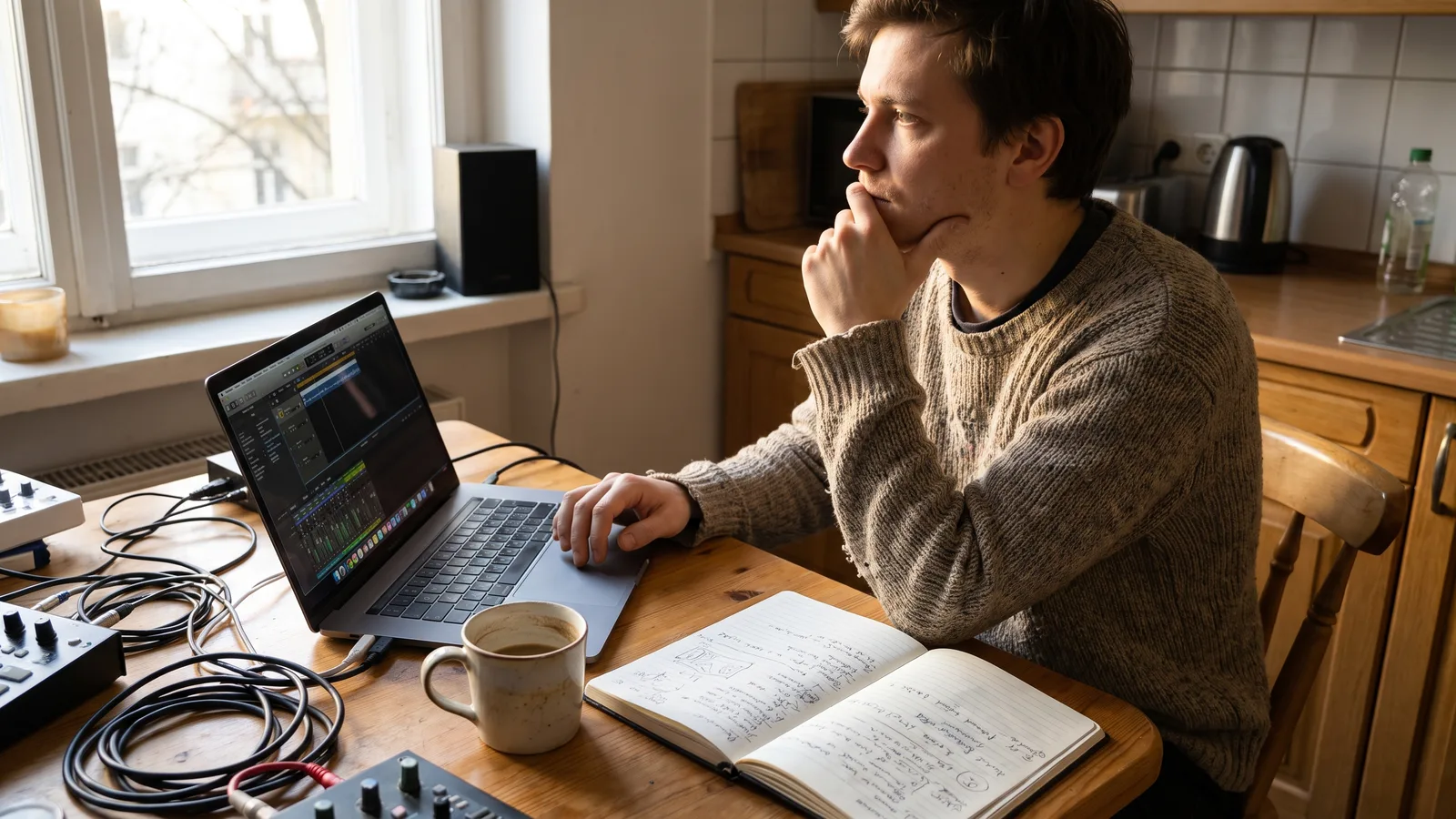
Somebody messaged me last month asking whether they should save up another few hundred euros for a “proper” audio interface or just buy the plugin bundle they'd had in their cart for a week. Their room, from the photo, was a bedroom with a bare wall behind the desk and a window to the left of the monitors. I told them to spend the money on neither, at least not yet, and hang a duvet on that wall for the weekend as a test. They thought I was joking.
I wasn't. Most home studio budgets get spent almost exactly backwards, and it's worth saying out loud where the money actually goes if you want your mixes to translate.
What a home studio really costs
Let's put a rough number on it, because vague advice helps nobody. A perfectly serviceable first setup — the kind that can produce commercially competitive work — runs somewhere between 800 and 1500 euros once you've got a computer already. That's it. If somebody tells you that you need more to start, they're either selling something or confusing gear with skill. The computer is already doing most of the work, and you own it. The rest of the list exists so you can hear what it is doing.
Here's roughly how I'd carve up that money, and it will look wrong to a lot of people:
- Acoustic treatment: 250–400 euros. Yes, more than your interface.
- Monitors or good headphones (ideally both, over time): 300–600 euros.
- Audio interface: 120–200 euros.
- One decent microphone, if you record: 100–200 euros.
- Plugins: whatever's left, which for a beginner should be close to nothing.
The last line is the one people fight me on. Bear with me.
The room is the instrument nobody buys
Your speakers don't play into your ears. They play into a room, and the room plays into your ears. In an untreated bedroom the low end bounces off parallel walls and builds up in the corners, so a note that's actually too loud sounds too quiet at your desk, and a note that's fine sounds boomy. You mix against those lies. Then you play the track in the car and the bass is a mess, because the car never had your room's problems.
Treatment fixes the thing every plugin in the world can't touch: what you're actually hearing. A few thick broadband panels at the first reflection points, a couple of bass traps stuffed into the corners, something soft on the wall behind you. You can build most of it from rockwool and fabric for the price of one boutique compressor. It is the least glamorous purchase in this whole list and it will improve your mixes more than anything else you'll ever buy. I've watched people spend two years chasing “the sound” through gear when the real fix was 300 euros of insulation and an afternoon with a staple gun.
Where cheap is completely fine
Now the good news, because this isn't a “buy expensive things” article in disguise. A huge amount of gear is a solved problem, and the cheap version is genuinely good enough to make records with.
The interface is the clearest example. A converter from a modern 150-euro interface is not meaningfully worse than one costing five times as much for what you're doing. The marketing wants you to believe otherwise. Your listeners will never, ever hear the difference between two clean converters, and neither will you in a blind test. Buy a reliable one with the input count you need and stop thinking about it.
Cables, stands, pop filters, a MIDI keyboard for sketching parts: buy cheap, replace when they break. A large-diaphragm condenser in the 100-to-200 range records vocals that end up on real releases every day. And your DAW almost certainly ships with stock compressors, EQs and reverbs that are perfectly capable. People made hits on those before you owned them.
The real cost of GAS
Gear acquisition syndrome doesn't announce itself as a problem. It feels like progress. New plugin, new folder of presets, an hour clicking through them, a small dopamine hit, and a project you didn't actually move forward. The cost isn't only the money, though the money adds up faster than anyone admits. Ten “small” sale purchases a year is a serious interface and a set of monitors you talked yourself out of.
The bigger cost is attention. Every new tool is a thing to learn instead of a song to finish. The engineers I know whose work I respect tend to own suspiciously little. They've got three compressors they know cold and a reverb they could set with their eyes shut. They reach without thinking because they've spent the hours. That fluency is the actual skill, and no purchase shortcuts it. A new plugin resets you to beginner on that one tool. Sometimes that's worth it. Usually you just wanted to buy something.
If a plugin genuinely fills a hole in what you can do, buy it. If it promises to make you sound better at a thing you already own three tools for, that's the GAS talking.
So where do plugins fit?
They fit last, and they fit small, and that's not an insult to plugins — we make them for a living. It's just the honest order of operations. Once your room isn't lying to you and you can actually hear what you're doing, then better tools start to matter, because now you can tell what they're doing.
You also don't need many to cover most of a mix. There's no shame in starting with free ones and learning them properly. A free plate like our RO-GOLD handles a surprising amount of reverb duty, and something like Canary will shape a drum bus without costing a cent. Learn those cold before you spend anything. When you do decide to buy, a broad bundle like the All Bundle tends to stretch a small budget further than picking off single plugins one impulse at a time — but only once you know what you're missing. Buying the toolbox before you know the job is just GAS with a discount code.
The version of this I'd tell a friend
Treat the room first. Buy monitors or good headphones you trust and learn how your favourite records sound on them. Get a boring, reliable interface and forget it exists. Record with one honest microphone. And keep your plugin spending small and deliberate until your ears, not your cart, are telling you what's missing.
Do that and you'll make better records on 1000 euros than most people make on ten times that. The gear was never the bottleneck. If you want to start the plugin side for free while you sort the rest out, grab RO-GOLD and Canary, spend a week actually learning them, and see how little you end up needing to buy.
Add a comment
You need to be logged in to add comments.