Studio Business
Half Up Front: The Awkward Conversation That Saves the Job

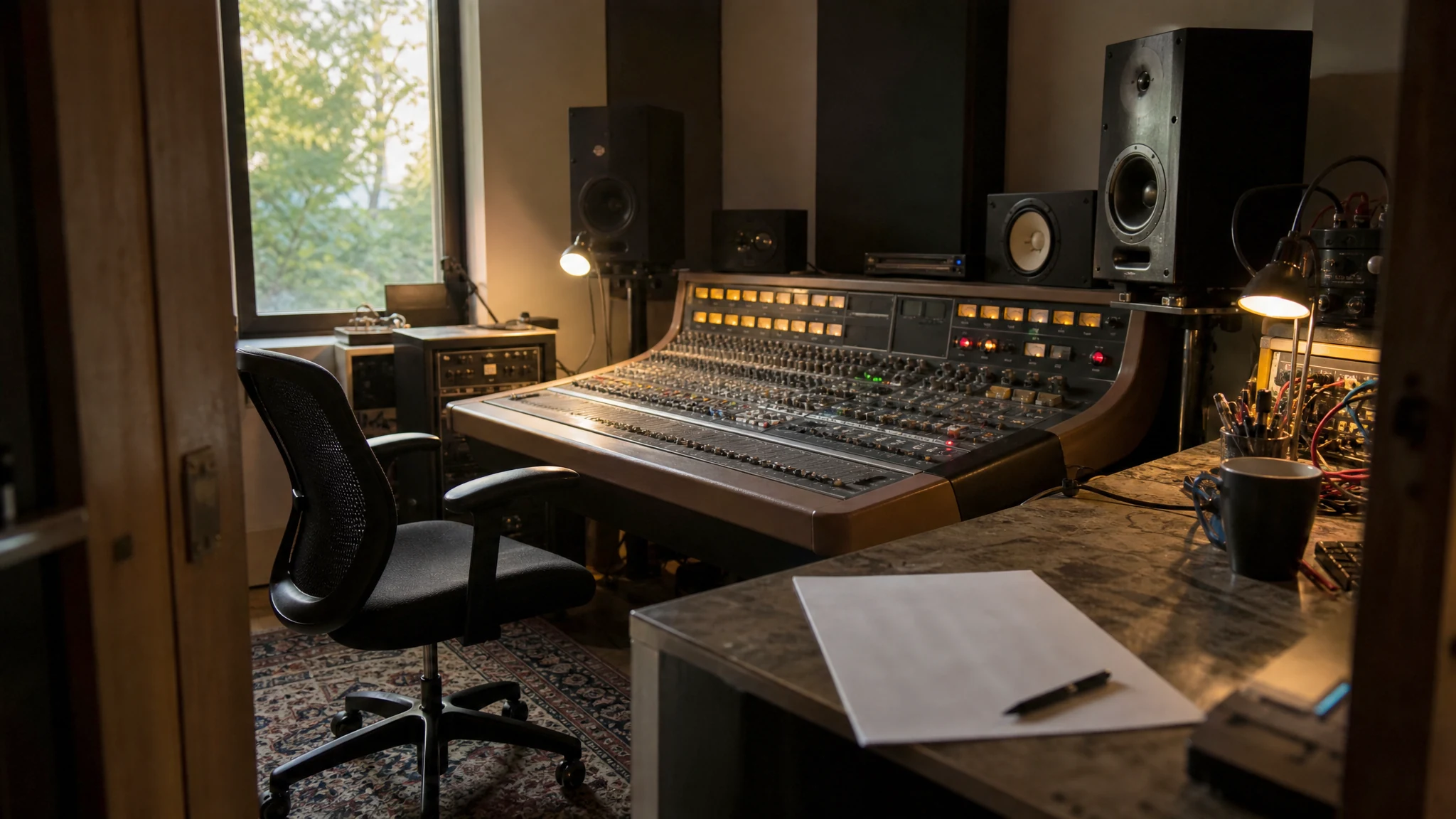
Six songs, a band I liked, a price agreed on the phone in March. I mixed the first two, sent them over, got a thumbs up and then nothing. In June the singer told me the band had broken up in May. Nobody had thought to mention it. Nine days of my year, and two mixes nobody will ever hear.
There was no deposit and no piece of paper. Not because I trusted them especially, but because asking felt like an accusation, and the job was already half mine and I didn't want to jinx it.
The last piece I wrote about money worked out the number: what a mix is worth once you count the hours nobody bills. This one is about the ten minutes after the number, where you find out whether it arrives.
A deposit is not a background check
The reason most engineers never ask is that it feels like calling someone a deadbeat to their face. That was my reading of it for years, and it's wrong in a way that's easy to prove: the roofer asks, the printer asks, the venue asks, the photographer asks, and nobody thinks less of you for it. A deposit isn't a judgement about a person. It's how a date gets held. Once I saw that I'd been mispricing my own calendar rather than insulting anybody, the sentence got much easier to say out loud.
Look at what the client is really buying. Not four hours of fader moves. A week in which I turn other work away and stay free for theirs. Hold that week on a handshake and I'm the only one in the deal carrying the cost of a change of mind, and in music a change of mind is the normal outcome, not the rare one. Bands split. Labels move a release date twice. The singer takes a job in another city, and the drummer inherits the email thread.
The other half surprised me. People take a booking seriously once they've paid for part of it. Sessions arrive on time, notes get written properly, and the record stops being a maybe.
Half before I open the session, half before the files go out
Here's the number, and it hasn't changed in years: fifty percent when we book, fifty percent before the final files leave my drive. On a 450-dollar song that's 225 to start and 225 at the end. The first payment isn't a formality, it's the thing that makes the booking real. Until it lands, the date in my calendar is written in pencil, and I'll say so, politely, if somebody else asks for the same week.
The second half needs one detail spelled out or it turns into a standoff. The client hears everything before they pay. I send a full-length MP3, or a private stream link, and they live with it as long as they need. What waits for the balance is the deliverable: the WAVs, the stems, the instrumental. Nobody has ever called that unfair, because they're not being asked to buy blind.
Anything longer than three songs gets split further. An EP runs in thirds: a third on booking, a third when the first mixes go out, the rest before the masters. Neither of us is ever more than a few hundred dollars exposed.
Two projects have gone quiet on me since. Both had paid their half. That's the whole mechanism.
One page, and the three lines everyone leaves off
What I send is one page. Not a contract in the courtroom sense, and I should say plainly that I'm an engineer rather than a lawyer, and contract law differs enough between countries that you should read this as how I work, not as legal advice. The page exists so two people remember the same deal eight weeks later, which human beings are remarkably bad at. Its bones I've listed before: what you deliver, how files should arrive, how many rounds are included, what a further round costs, turnaround, and the price with its split.
Scope is the first line and the one people write too vaguely. "Mix the song" isn't scope. Mine names the number of songs, says mixing is not mastering and not tuning or timing repair, and says one song means one version. A radio edit, a clean version, a cut for a video: all fine, all quoted separately, all cheap to agree in advance and awkward to raise on delivery day.
The second line is about time rather than money, and I was missing it for years. Turnaround runs in working days from the day the complete session arrives, not from the day we shook hands. When a session lands two weeks late, delivery moves by at least two weeks, because the week I held went to somebody else. Written down, that's a scheduling note. Said for the first time to an annoyed client, it sounds like an excuse.
Formats and rights fill the rest. Formats are quick: bit depth, sample rate, stems named and starting at bar one, an instrumental, an MP3 for phone checks. Rights need two sentences, and almost nobody writes them. The recordings stay theirs, the files are theirs the moment the balance clears, and I keep the right to put thirty seconds in my portfolio unless they say otherwise.
Unlimited revisions is the line that eats the fee
Nobody loses a job's profit at round seven. It goes at round two and a half, in a drip. A message on Tuesday asking if the vocal could come up a touch. Thursday, could the guitars be wider. Sunday night, the drummer has listened and has one thought. None of those is a revision round in any sense worth the name, and each costs twenty minutes of opening, remembering, moving, bouncing, uploading and writing back.
The fix isn't more rounds, it's a definition, and I worked mine out in the pricing piece: one consolidated list, sent at once, by one decision-maker. What the page adds is the sentence that enforces it without being unpleasant. Mine is: happy to do all of that, send it as one list and it's round one. No debate, no invoice, no lecture. The drip stops, because the client can finally see the shape of the thing.
There's a craft side to this. Two included rounds only stays generous if round two is cheap for you, and what makes it cheap is recall. If the vocal chain is one insert with a saved preset behind it, "more weight on the lead" is ten minutes. If it's seven plugins you assembled by feel at two in the morning, it's an hour of archaeology. Half my templates sit on a single strip like the Edelweiss'72 for that reason alone.
Price a further round anyway. Low, not punitive. Almost nobody buys one.
The email, more or less word for word
All of this dies if you send it like a solicitor. I have watched people spend a week on a contract template and then lose the job in the covering mail, because the mail read like the opening move of a dispute rather than the start of a piece of work. The contract itself was fine. The sentence wrapped around it was not, and that sentence is the part the client actually reads before they decide how the next six weeks are going to feel. The version that works is short, sounds like a person, treats the deposit as a scheduling matter rather than a demand, and ends with a question that is easy to answer.
Hi Sam, really glad this is happening. It's 450 per song for the three, so 1,350 all in. I work half up front and half before the final files go out, so 675 locks the dates and the rest comes when you've signed off. Details on one page below, so we both remember it in six weeks: what you get, two rounds of notes, and the turnaround once your session lands. Does the week of the 14th work, or would you rather I held the week after?
The word doing the work is "locks", and it is worth the thirty seconds it takes to find it, because every alternative carries an accusation the client can hear. Not "before I can start", which sounds like a barrier, and not "to confirm you're serious", which is the accusation they were braced for.
Put the page in the body of the mail, not in a PDF nobody opens. I was once sent a page and a half by a mastering house, "the Engineer" capitalised throughout, and my first thought was that I'd rather pay somebody else. A reply saying yes is all the agreement I've needed.
When they say no
It happens, and the no tells you more than the yes does. Most often it's cash flow, which is honest and easy to solve: the money isn't there until the gig money comes in. Take a third instead, or set the start date for the week the money arrives. What you never do is start on a promise. Starting early to be nice is how you end up with a project that owes you 400 dollars and a person who avoids your messages out of embarrassment rather than malice.
The second no is unfamiliarity. Plenty of artists have only worked with people who invoiced at the end, and they're blinking rather than objecting. One sentence settles it: this is how I hold dates, and it protects you too, because it's the moment we write down what you're getting.
Then there's the kind where you explain twice and they still won't. What they want is the option to vanish without cost. Two people have walked away from me over the deposit. One came back in autumn and paid the whole fee up front.
Write the page once and reuse it for a decade. Half up front, a definition of what a round of notes is, an email that sounds like you. The worst it can produce is a client who says no in March — the cheapest thing that will ever happen to you.

Add a comment
You need to be logged in to add comments.