Studio Business
What a Mix Actually Costs, and Why Hourly Rates Mislead Everyone

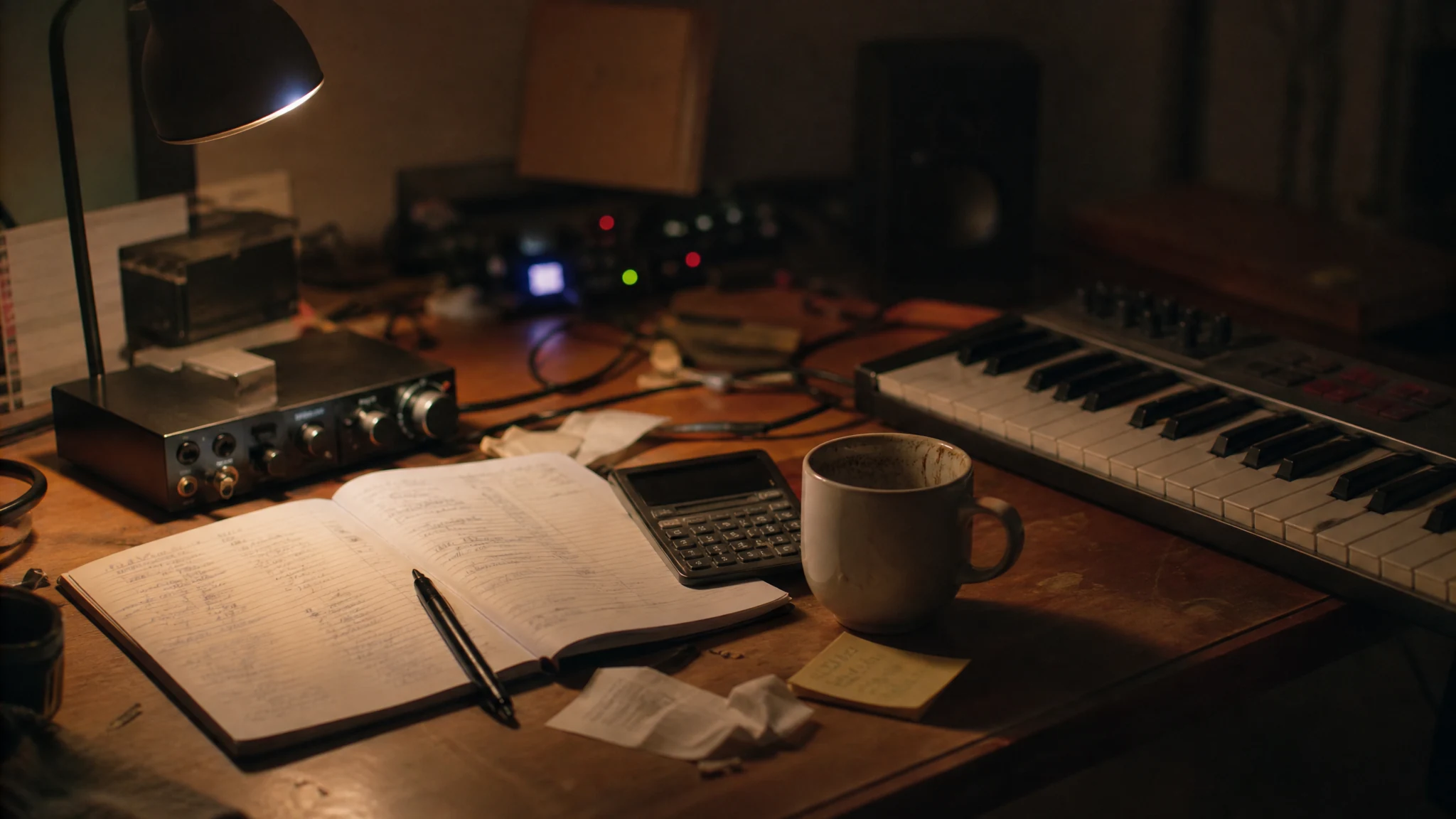
A producer asked me last spring what I charge per hour. I gave him a number, he booked four hours, I mixed his song, he paid, everyone was happy. Then I opened my time log. The faders had taken four hours. The job had taken eleven.
The other seven weren't padding. The call beforehand. A session that arrived as sixty-one files named Audio 01 through Audio 61. Two rounds of notes. The instrumental he remembered he needed. The invoice, then the polite email three weeks later about the invoice.
Hourly billing feels like the honest way to price creative work. It's how I started, and how most engineers I know still work. It's also why so many of them are busy and broke at once.
The hours you bill are not the hours you work
Ask a client to picture what they're buying and they picture you at the desk, moving things, the track getting better. That part is real, and it's the part you're good at. In my log it runs between a third and a half of the time a mix takes from first message to cleared payment. The rest is invisible, and unlike the mixing, it never gets faster.

Prep eats more than anyone expects: downloading, checking that everything starts at bar one, hunting the two files that bounced at the wrong sample rate, renaming, pulling up the reference and the rough they secretly still love. Then the talking, and the notes that arrive as voice memos recorded in a car.
Behind all of it sits work attached to no job at all: for every booking I land I've written three or four quotes. Real hours, with no invoice to sit on.
One job, counted honestly
Here's a single song broken down the way it happened, the kind of small independent release that pays a lot of freelance bills. My numbers from one job, written down as I went. An example, not a survey. Keeping a log like this for a month is the cheapest business advice I have.
- First call, then writing the quote — 45 min
- Prep: download, consolidate, rename, check phase and sample rates — 1 h 15
- The mix itself — 4 h
- Bounce, sleep on it, check it on a phone and in the car — 45 min
- Revision round one — 1 h
- Revision round two — 40 min
- Delivery: stems, instrumental, tagging, upload — 45 min
- Email across the three weeks the job stayed open — 1 h
- Invoice, the reminder, the bookkeeping entry — 30 min
A shade under eleven hours. The fee was 400 dollars. Against four hours at the desk that reads as 100 an hour. Across all eleven it's 37. Subtract the quotes I wrote that month for work that never landed, plus tax, the room and the gear, and what's left sits in the twenties.
Getting better makes the hourly rate worse
My first paid mixes took nine or ten hours at the desk, and most of that was second-guessing. Four compressors on one snare. An EQ move undone twice. The vocal chain restarted because I'd lost the plot somewhere around the third plugin. The same song takes me three hours today and comes out better. Fifteen years of practice bought me a two-thirds pay cut.
Speed is mostly decisions you've stopped re-making. Same template every time. The lead vocal gets an opto compressor before I've heard a note, because a VLA-2A at four or five dB of gain reduction is a known quantity, not an experiment. When a source wants a chain rather than one box, a strip like the VWB-1X holds the filters, both Pultec sections and the tube compressor in one window.
Nobody ever wanted hours. They wanted a record that holds up next to the songs they love. Price the result and speed pays you. Price the clock and it robs you.
Building a number you can defend
Don't start from what other engineers charge. Start from your year. Say you want 40,000 out of mixing, across 44 working weeks, because holidays and the week the drive died are real. Then be honest about throughput: with prep, revisions and admin in the total, two mixes a week is a full schedule for one person. That's 88 songs, and 40,000 over 88 is about 455 a song.

Round it to 450 and the price has a reason behind it. If only one song a week gets through the door, the same sum says 900, and you've learned your problem is throughput rather than pricing. If two a week is comfortable and the phone keeps ringing, you're underpriced.
The client-facing version is one number, one scope, one date. Never a breakdown of hours: it invites a negotiation about hours, and you end up defending seventy-five minutes of prep instead of talking about the record.
Revisions are where a flat fee goes to die
A flat fee only works if finished means something specific. Two rounds included is where I landed, and two isn't the important part. A round is one consolidated list of notes, sent at once, by one decision-maker. Three emails over four days are three rounds of work and one round in the client's head, and that only ends well if it was written down first.
The other half is what isn't a revision. A new vocal take. A changed arrangement. An instrument added after delivery. A label that now wants a different record. Those are new jobs, often small and friendly ones, but they get quoted. Saying so in the first email costs nothing. Saying it in round four costs you the client.
Price the extra rounds too, low enough that nobody feels punished. Almost no one ever buys one. A client who'd have fired off eleven notes at one in the morning writes a single careful list instead, because the list now costs something.
Put it on one page
All of this collapses into a quote you write once and reuse forever. Mine runs to seven lines and takes four minutes to fill in. Since I started sending it, the arguments have stopped.
- What you deliver: format, sample rate, bit depth, stems or no stems
- How the files should arrive, and that the clock starts when they do
- How many revision rounds are included, and what counts as one round
- The price of a further round
- What counts as a new job rather than a revision
- Turnaround, in working days from the day the session lands
- The price as one number, with a deposit up front and the balance before delivery
The deposit is the line most people leave off and the one that changes the most. Half up front turns a maybe into a booking, and a project that goes quiet still paid for the half you did.
You don't have to change your prices this week. Count first. Log one whole job, first message to cleared payment, and set the real total beside the fee. For most people it stings. Then build a flat fee that carries all eleven hours, not the four your client pictures. And when you get faster, protect it: the hours you no longer spend are the raise nobody else will give you, and a chain you know cold is how you buy them. Ours are free to trial, which beats finding it one purchase at a time.



Add a comment
You need to be logged in to add comments.