Studio Life
Beating Creative Block and Studio Burnout Without the Platitudes

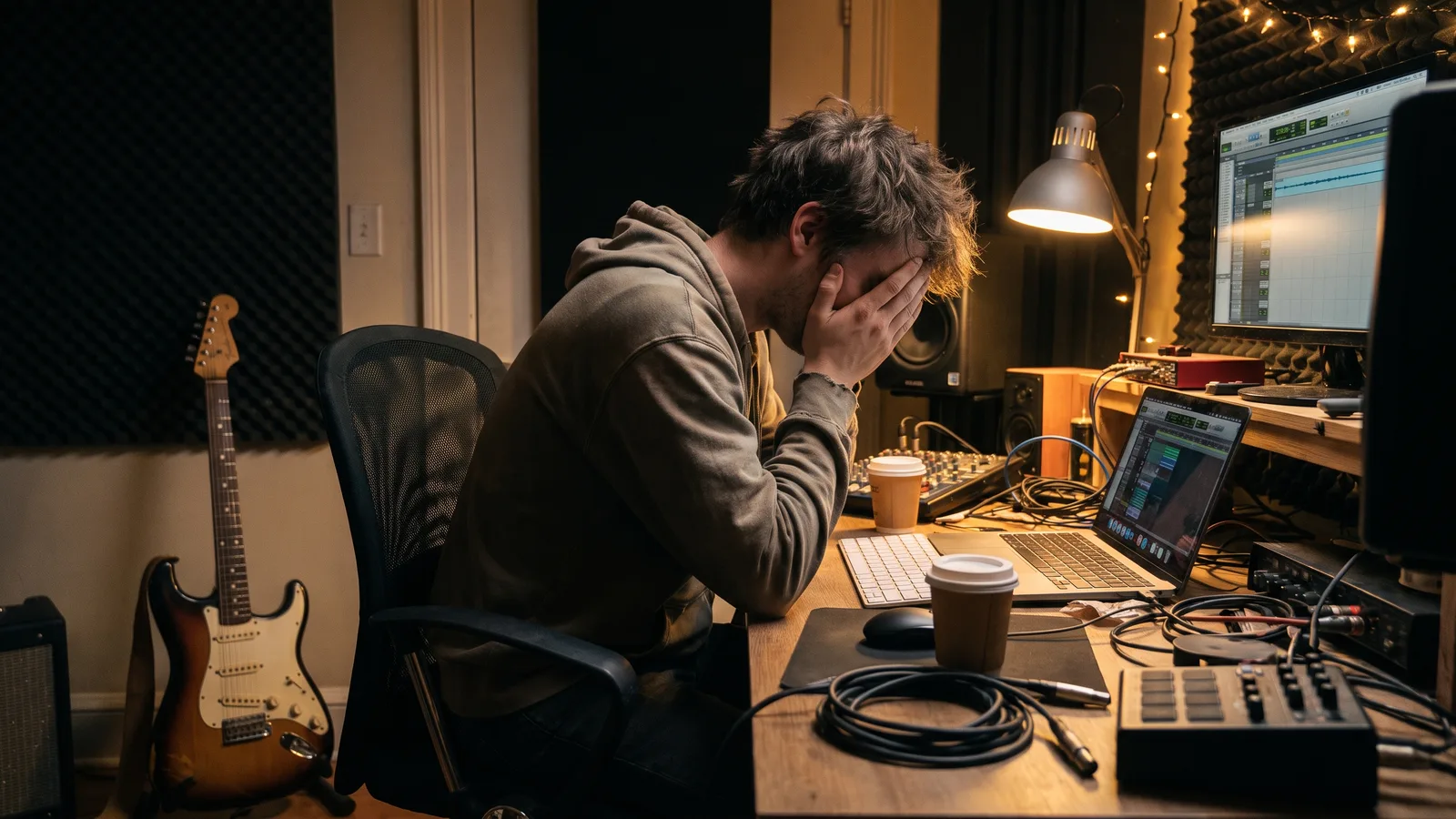
There's a specific kind of quiet in a studio when nothing is working. The session is open, the monitors are on, the coffee's gone cold, and you've been staring at the same eight bars for two hours. You mute a track. You unmute it. You add a reverb, hate it, remove it. Nothing sounds bad, exactly. It just doesn't sound like anything. If you've made music for any length of time, you know this room. I've spent whole weekends in it.
We call it creative block, and when it drags on we call it burnout, and both names make it sound like weather — something that rolls in and sits over you until it decides to leave. That framing is comforting and mostly useless. Because block isn't the absence of ideas. Usually it's a pile-up of unfinished ones, plus a nervous system that has learned to associate the chair with failure.
What's actually happening when you freeze
The romantic story is that the muse left. The boring, truer story is that you've raised the stakes on every decision until none of them feel safe to make.
Early on, you make music badly and freely because nobody's watching and you don't know enough to judge yourself. Then you improve. You develop taste faster than skill, which is the cruelest gap in any craft — your ear can now hear exactly how far your hands fall short. Every sound you commit to gets measured against records you love, against your own last good track, against the version of you that people expect. That's a lot of weight on a hi-hat pattern. So the brain does the sensible thing and stops committing. It keeps everything in draft. Freezing feels like a lack of ideas, but it's really an excess of judgment arriving too early.
Burnout is the longer game. It's what happens when the reward stops matching the effort for long enough that your body opts out before your will does. You sit down wanting to work and feel a flat, grey resistance instead. That's not laziness. It's a fairly rational response to a system that's been giving you stress with no payoff. Naming it correctly matters, because you fix a judgment problem and a depletion problem in different ways.
Constraints, because infinite choice is the enemy
A blank session with unlimited plugins is not freedom. It's a hundred doors and no reason to walk through any of them. The fastest way I know out of the freeze is to slam most of those doors shut on purpose.
Pick a stupid, arbitrary rule and obey it. One synth, one drum kit, no more. Finish something in a single sitting or delete it. Only three tracks. Mono until the arrangement works. Write the whole thing at 4 a.m. loudness, headphones only. The specific rule doesn't matter. What matters is that a constraint replaces the exhausting question "what should I do?" with the far easier "what can I do inside this box?" Limitation is where taste turns back into play. The whole history of a genre is people making magic because the gear could only do three things.
Finish the bad idea
Here's the habit that changed the most for me: finish things that are obviously not good.
Producers accumulate hundreds of eight-bar loops and almost no finished tracks, and then wonder why they feel stuck. Loops are the safest thing in the world. A loop can always become brilliant later, in theory, so it never has to be judged. The moment you try to write a second section, an ending, a transition, you have to make decisions that could be wrong, and that's exactly the muscle that's atrophied.
So finish the bad one. Take the loop you don't believe in and drag it all the way to an ending you don't love. Export it. It'll be mediocre and that's the entire point. You're not chasing a good song, you're rebuilding the nerve to commit. Ten finished bad tracks will teach you more, and unstick you faster, than a hundred promising fragments sitting in a folder called ideas. Momentum comes from completion, not from quality. Nobody tells you that at the start.
The myth of motivation
The advice to "wait until you feel inspired" is the most expensive lie in this craft. Motivation is not the fuel. It's the exhaust. It shows up after you start moving, not before, which is why waiting for it is a trap that can eat years.
The professionals I admire don't feel like working most days either. They just decoupled the work from the feeling. You sit down at the same time, you open a session, and you agree with yourself in advance that the first twenty minutes are allowed to be garbage. Lower the bar until stepping over it is trivial. "Make one sound I don't hate" is a bar you can clear on a bad day. "Write a hit" is not. Discipline here isn't grit or grinding — it's just building a door small enough that a tired, discouraged version of you can still walk through it.
And sometimes: walk away
All of that assumes the tank has something in it. Sometimes it doesn't, and no clever trick will help, and pushing harder just teaches your brain to hate the room more.
Real depletion needs rest, not tactics. The oldest cliché in mixing is true for a reason: the fix you couldn't find at midnight is obvious after a walk, a night's sleep, a day of not touching the project. Ears fatigue. So does the part of you that generates ideas. Stepping away isn't quitting, it's maintenance, and the guilt that says otherwise is the same voice that got you frozen in the first place. Go make dinner. Listen to a record for pleasure instead of study. Let the session breathe without you.
Input matters too. Creativity is mostly recombination, and if you've spent three months only making and never listening, watching, reading, or living, there's simply less in the tank to recombine. Refill it. Not as procrastination dressed up as research — genuinely, put the good stuff back in.
The one move that frees the rest
If I had to keep a single move, it's this: lower the stakes until you're just making noise again. Not a track, not a demo, not content. Noise. The thing you did before you knew enough to be scared of it.
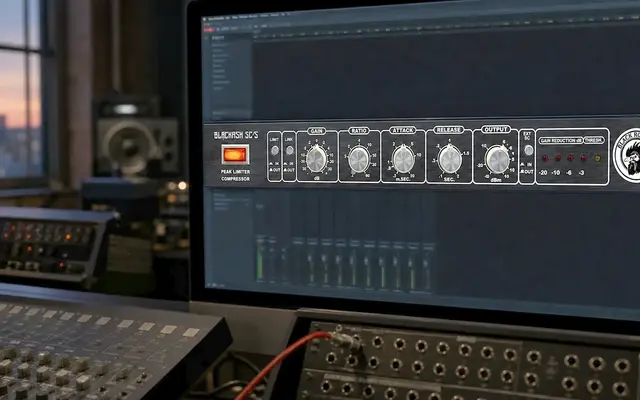
When I really can't start, I'll open a free, no-pressure tool and abuse it — run a drum loop through something like our free Canary drum shaper and just crank knobs until it sounds wrong in an interesting way. No goal. No project to ruin. Twenty minutes of that and something usually catches, and then I'm working without having noticed the moment I started. That's the whole trick, if there is one. You don't wait for the block to lift. You make something so small and low-stakes that the block never gets a vote.
The spark isn't gone. It's just buried under everything you've learned to expect of yourself. Make one bad thing today and finish it. Tomorrow you'll be a person who finishes things.

Add a comment
You need to be logged in to add comments.