Recording
The Microphone Placement Mistake That's Sabotaging Your Vocal Recordings

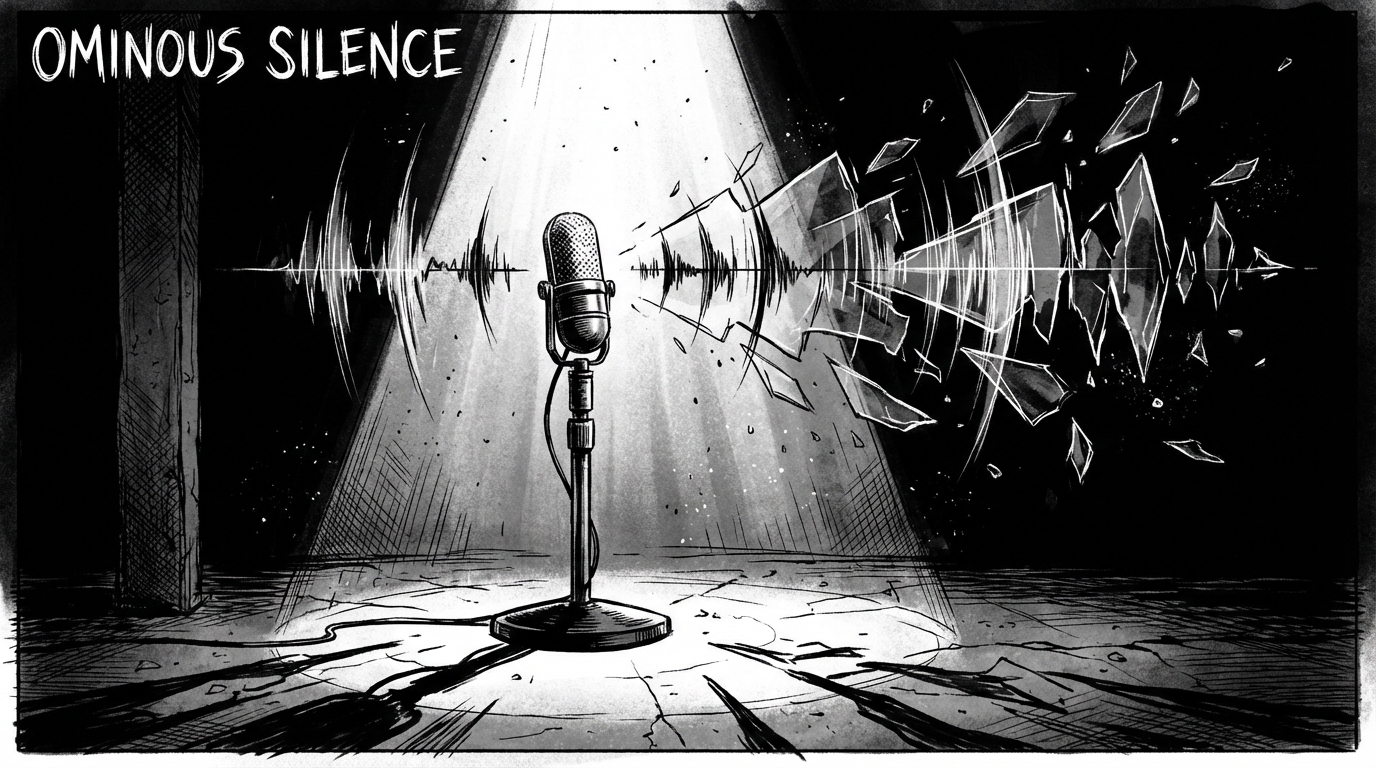
Here's what nobody tells you: drop fifty grand on the world's most pristine microphone, install acoustic treatment that costs more than your car, and you'll still end up with vocal recordings that sound like garbage. Why? Because you're making the same mic placement mistake that destroys bedroom productions and big-budget albums alike.
Your gear isn't the problem. Neither is your room. Not even your singer's voice. The culprit? That space between microphone and mouth. Screw this up, and you'll fight a losing battle no plugin can save. Get it right, and your vocals slide into the mix like they were born there.
How much does microphone placement actually affect sound quality?
More than the choice of microphone does. Proximity effect is a property of the polar pattern, not of the price, so moving a cardioid capsule closer to a singer raises the low end in a way no other microphone can undo afterwards. Distance also sets the ratio of direct sound to room sound, and that ratio is the one thing you cannot fix in the mix. Everything else, the capsule, the preamp, the converter, only changes the colour of a decision that distance already made. That is why two engineers with the same microphone in the same room get different recordings.
The practical consequence is unglamorous. An hour spent moving the stand is worth more than the difference between a $300 microphone and a $3,000 one, and it is the part of the session nobody photographs.
None of which makes the microphone irrelevant. It decides the flavour. Placement decides whether there is anything worth flavouring.
The Sweet Spot: Why 6-12 Inches Actually Means Something
Engineers throw around "6-12 inches" like it's gospel without explaining the science. Think Goldilocks zone for capturing voice. Get too close, and proximity effect drowns you in boomy, muddy low-end — every singer sounds like they're crooning through a storm drain. Back off too far, and you're recording more room than voice.
Proximity effect isn't opinion — it's physics. Dynamic mics (especially cardioid patterns) boost bass as sources get closer. At 2-3 inches, you'll see 10-15 dB bumps around 100-200 Hz. That's not warmth. That's mud pretending to be character. Your singer doesn't naturally sound like they gargled gravel; your mic placement is lying. And it moves with the performance. A singer who leans in on quiet lines and pulls back when they push swings that low-end bump through the whole take, so the balance never sits still.
Common Mistake
Thinking closer always means better quality. Proximity effect can dump 10-15 dB of unwanted low-end boost at distances under 4 inches, creating more problems than it solves.
Here's where it gets tricky: optimal distance changes with mic type and polar pattern. Large-diaphragm condensers handle closer positioning (4-8 inches) because they've got flatter proximity response. Ribbon mics? Total divas. Give them 8-12 inches minimum, or they'll punish you with harsh transients and frequency response that sounds like punishment.
The Room Tone Trap: When Distance Becomes Your Enemy
Push too far the other direction, and you'll understand why pro studios blow insane money on acoustic treatment. At 18+ inches, you're not recording the vocalist — you're recording everything else. The room, the HVAC, that mysterious rattle, your neighbor's leaf blower.
Signal-to-noise ratio becomes your worst enemy. Each extra inch demands more gain, which amplifies everything: good, bad, and aggressively mediocre. Your beautiful vocal gets buried under room reflections, electrical hum, and fluorescent lights buzzing their annoying song.
Untreated rooms show their true colors here. That spare bedroom you called a "studio" might sound fine when you're in it, but mics don't lie. They'll capture every parallel wall slap, every hard surface reflection, every acoustic flaw you've been ignoring.
Pro Tip
In untreated rooms, each inch of extra mic distance roughly doubles room sound pickup. The 2:1 rule (doubling distance halves signal level) works against you here.
Genre Matters: Why Pop Vocals and Jazz Standards Need Different Rules
One-size-fits-all advice dies here. Different genres want different vocal characteristics, and mic placement is your first weapon.
Pop and R&B vocals love closer placement (4-6 inches) for intimate detail and presence. That slight proximity effect actually helps, adding weight and authority without drowning the mix. Hip-hop? Sometimes even closer, because chest resonance and proximity warmth make words hit harder. Closer placement raises the stakes on plosives and sibilance though, so that is where a pop filter and a slight off-axis angle stop being optional and start being part of the sound.
Jazz and acoustic folk want more distance (8-12 inches) to capture natural resonance and breathing room. Makes intimate performances feel intimate instead of claustrophobic. Too close, and you lose the air that makes whispered vocals devastating.
Rock vocals are their own beast. You need presence to cut through distorted guitars and pounding drums, but not so much proximity that vocals become muddy and lost. Sweet spot usually hits 6-8 inches, sometimes with high-pass filtering to tame lingering low-end buildup.
The Polar Pattern Puzzle: Your Microphone's Got Personality
Every mic has a polar pattern — basically, its listening personality. Ignore this, and you're shooting blind. Cardioid patterns (most common) are pretty forgiving with placement, but they still show proximity effect and rear rejection that changes with distance.
Omnidirectional mics are usually described as immune to proximity effect. That is close enough for daily work and not quite true: an AES convention paper that swept microphones against a guitar cabinet with pink noise and with music found proximity effect on omnidirectional microphones as well, and found the textbook 1/x distance law holding up poorly. What an omni really does is grab everything in a 360-degree radius. Too close, and you get handling noise and plosives. Too far, and you're recording the entire universe. Sweet spot tends to be 8-15 inches, depending on room treatment. In an untreated room that range collapses fast, because with an omni the room is not bleed, it is part of the vocal.
Figure-8 patterns? Total drama queens. They grab sound from front and back while rejecting sides, making placement critical for proximity and bleed control. They want 8-12 inches of breathing room, and they'll make you pay for getting too close or too far.
Reality Check
Most vocal problems blamed on "bad acoustics" are actually polar pattern misunderstandings. Learn your mic's pickup pattern before blaming the room.
The Fix-It-Later Myth: Why Post-Processing Can't Save Bad Placement
Truth that separates pros from bedroom warriors: you can't EQ your way out of bad mic placement. Sure, you can high-pass that proximity away, but you're also removing legitimate low-end that belongs there. You can compress and gate to minimize room noise, but you're also crushing natural dynamics that make vocals feel alive.
Bad mic placement is like trying to fix blurry photos in Photoshop. You can sharpen, enhance, apply every filter known to humanity, but you can't create information that was never captured properly.
Quality processing matters here. A well-designed compressor like the VLA-2A can enhance well-recorded vocals, adding smooth optical compression that glues vocals to the mix. But it can't perform miracles on vocals that were compromised from the start.
Frequency content you capture during recording is your raw material. Record too much room reflection, and no EQ will make it sound intimate. Let proximity effect muddy the low-mids, and cutting those frequencies also removes natural chest resonance that makes vocals feel full and present.
Warning
Every dB of unwanted proximity you remove with EQ also removes legitimate low-end content. Get placement right first, or spend forever chasing your tail in post.
The Practical Solution: Test Your Way to Vocal Nirvana
Stop guessing. Start testing. Methodology that separates pros from the perpetually frustrated: record the same vocal line at 4, 6, 8, 10, and 12-inch distances. Keep everything else identical — same gain, same polar pattern, same singer, same line.
Listen back and focus on three things: low-end clarity (is proximity helping or hurting?), presence and intelligibility (can you understand every word without strain?), and room sound (how much space versus voice?). The right distance reveals itself quickly.
Don't just listen solo. Throw those vocal tests into basic mix context — drums, bass, simple chord progression. Optimal recording distance might surprise you. What sounds great isolated might disappear in a mix, while distance that seemed too far might provide perfect presence and clarity to cut through without fighting.
Document your findings. Different singers, different mics, different rooms yield different optimal distances. Keep notes — that knowledge becomes invaluable when you're working under pressure and need to nail vocal sound quickly.
TL;DR: The Mic Placement Essentials
- The 6-12 inch rule exists for physics reasons — proximity under 4 inches adds 10-15 dB of unwanted low-end boost.
- Distance over 12 inches captures more room than voice, requiring more gain and amplifying noise.
- Genre influences optimal placement — pop/R&B can handle 4-6 inches, jazz/acoustic needs 8-12 inches for natural resonance.
- Mic polar patterns dictate placement sensitivity — cardioids are forgiving, omnidirectional mics need more distance, figure-8 patterns are extremely position-sensitive.
- Post-processing can't fix bad placement — EQ removes legitimate frequency content along with unwanted artifacts.
- Test multiple distances with same vocal line, listen in mix context, and document findings for future sessions.

Add a comment
You need to be logged in to add comments.