Sound Design
The Hidden Science Behind Analog Modeling: How Plugins Really Recreate Hardware


The Voodoo Behind the Code
Here comes the marketing bullshit again — "Meticulous modeling of vintage hardware," "Authentic analog warmth," "Painstakingly recreated down to the component level." Christ. Makes you think these plugin devs are conducting séances, calling up the spirits of dead Fairchilds through some Python ritual.
Underneath all that flowery horseshit? Real rocket science. Stuffing a room-sized console into your laptop requires mathematical wizardry that'd leave NASA engineers weeping. It's part archaeology, part electrical engineering, part straight black magic.
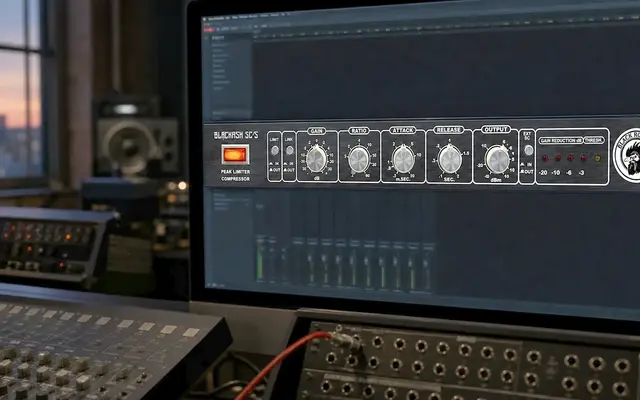
Understanding how analog modeling actually works will satisfy your gear nerd curiosity, sure. Plus it'll help you choose better tools, set realistic expectations, and maybe grasp why that VLA-2A plugin sounds so damn close to the $3,000 hardware monster collecting dust at Abbey Road.
Reality Check
Today's analog modeling hits extraordinary accuracy levels. The question isn't whether plugins can match hardware anymore — it's about how sophisticated math captures those nuanced behaviors that make analog gear special in the first place.
Circuit Autopsy: Reverse Engineering the Analog Soul
This whole process starts with electronic archaeology. Engineers drop serious cash on eBay for vintage units that might not even turn on, then slice them open like med students working on an expensive cadaver.
Every component gets documented — resistor values, capacitor types, tube specifications, transformer windings — all mapped with obsessive precision. Here's the twisted part: vintage gear doesn't just vary between different models. Individual units of the same compressor can sound completely different because of component tolerances, decades of aging, years of studio abuse.
That "magical" LA-2A from your favorite album? Probably has leaky capacitors, tubes running completely outside specification, transformers that've developed their own unique saturation curves after fifty years of getting hammered. These "defects" often become exactly what makes vintage gear sound special.
Modeling teams blast hardware with thousands of different test signals. Sine waves, square waves, pink noise, real music — anything that might reveal how circuits behave when pushed. They pump signals through hardware and measure what comes out, building this massive sonic fingerprint of each unit's personality quirks.
The Component Lottery
Vintage gear got built with whatever components were handy at the time. That "golden" unit might sound special because it randomly got a particularly good tube or transformer — pure dumb luck that's impossible to model consistently.
Mathematical Metamorphosis: From Circuits to Code
Once engineers figure out hardware behavior, they face this impossible task — translating analog chaos into digital order. This is where the real magic happens, and where math gets genuinely terrifying.
Analog circuits are continuous systems. They respond to infinitely variable inputs with infinitely variable outputs, everything happening in real-time with zero discrete steps. Digital systems work with samples — individual audio snapshots captured thousands of times per second. Like trying to recreate flowing water with individual drops.
Nonlinearity? That's the real nightmare. Most of what makes analog gear sound "musical" comes from circuits misbehaving — subtle compression, harmonic distortion, frequency-dependent phase shifts that happen when you least expect them. These nonlinear behaviors are insanely complex to model mathematically. A basic tube preamp might require hundreds of equations just to describe its basic operation.
Enter differential equations, Fourier transforms, other mathematical horrors that would've murdered your high school calculus teacher. Engineers deploy Volterra series, neural networks, physical modeling approaches — each one trading off accuracy against CPU efficiency and musical usefulness.
Some models focus on recreating exact electrical behavior — virtual electrons flowing through virtual components. Others take more practical approaches, using sophisticated algorithms to mimic audible results without necessarily modeling underlying circuitry.
The Sampling Rate Bottleneck
Most plugins run at your session's sample rate (usually 44.1kHz or 48kHz), but analog circuits operate in continuous time. This fundamental mismatch requires clever workarounds and often explains why certain plugins sound better when you oversample them.
Why Digital Emulations Sound Incredibly Close to Their Analog Counterparts
Today's analog modeling hits remarkable accuracy through engineering breakthroughs and mathematical wizardry. Best plugins capture legendary hardware essence with stunning fidelity.
Advanced oversampling techniques solve many digital headaches. Processing at sample rates way higher than your session rate lets plugins accurately model high-frequency behaviors and dodge digital artifacts that plagued earlier software generations.
Computational power exploded over the past decade. What needed supercomputers in early modeling days now runs comfortably on laptop processors, allowing developers to implement sophisticated algorithms that capture subtleties previously impossible to recreate in real-time.
Smart developers focus on what actually matters: harmonic content, compression characteristics, frequency response, transient behavior. Modern plugins excel at capturing these musically critical elements while efficiently managing less audible aspects like power supply noise or component tolerance variations.
Machine learning and neural networks revolutionized modeling accuracy. These AI-driven approaches learn complex nonlinear behaviors from massive hardware measurement datasets, often capturing nuances that traditional modeling approaches completely miss.
The Sweet Spot
Great modern plugins don't just recreate static hardware behavior — they capture how analog gear responds dynamically to different musical content, making them feel alive and responsive rather than static and digital.
Beyond the Numbers: The Human Element
Even the most sophisticated modeling in the world means absolutely nothing if it doesn't pass the final test: does it sound right to human ears? This is where art meets science. Where great plugin developers separate themselves from the wannabes.
Great analog modeling isn't just mathematical precision — it's understanding what makes hardware special in the first place. How does a compressor grab transients? What's the subtle saturation when you push it hard? Those frequency-dependent behaviors that make certain EQ curves feel musical?
Top modeling teams include people who've worked with original hardware for decades. They know exactly how a real LA-2A responds when you slam it with bass DI, or how an 1176 changes character as it warms up over time. This experiential knowledge guides the modeling process, helping engineers focus on behaviors that actually matter in musical contexts.
This human element explains why some plugins with technically inferior modeling can sound more convincing than mathematically superior alternatives. A plugin like VLA-2A succeeds not just because of modeling accuracy, but because its creators understood what made original hardware special and focused their efforts accordingly.
During the listening phase, everything gets decided. Engineers spend countless hours A/B testing models against original hardware, using everything from solo'd kicks to full mixes. They're listening for that moment when the plugin disappears — when it stops sounding like a digital approximation and starts behaving like the real thing.
The Golden Ears Paradox
Sometimes the most experienced engineers make the worst judges of modeling accuracy. They know original hardware so intimately that they hear differences completely meaningless to average users. Best models often satisfy regular mixers more than hardware purists.
The Future of Fake Analog
Analog modeling keeps evolving at breakneck pace. Machine learning plays bigger roles now, with neural networks trained on massive hardware behavior datasets. These AI-driven approaches capture complex nonlinearities that traditional modeling struggles with — often with surprising accuracy.
We're seeing more sophisticated approaches to handling digital audio's inherent limitations too. Advanced oversampling, better anti-aliasing filters, clever mathematical tricks — pushing boundaries of what's possible within your DAW's constraints.
Most importantly though — modeling is becoming more musically intelligent. Modern plugins don't just recreate static hardware behavior. They adapt dynamically to input signals, varying response based on musical content rather than just electrical principles.
End result? A generation of plugins that don't just sound like their hardware inspirations — they feel like them. They respond to your musical decisions in musically meaningful ways, encouraging the kind of creative choices that made original gear legendary in the first place.
So whether you're reaching for a modeled compressor, EQ, or preamp, remember — you're accessing decades of engineering expertise, countless hours of measurement and listening, mathematical wizardry that would've been pure science fiction just a few decades ago. Pretty remarkable for something costing less than a decent microphone.
TL;DR — The Science Behind The Magic
- Analog modeling starts with reverse engineering hardware down to individual components, measuring responses to thousands of test signals
- Converting analog behavior to digital requires complex mathematics like differential equations and Volterra series — it's rocket science, literally
- Modern modeling achieves remarkable accuracy through advanced oversampling, machine learning, and sophisticated mathematical techniques
- Top models prioritize musically relevant behaviors while using exponentially more powerful processors than early modeling attempts
- AI-driven approaches and neural networks now capture complex nonlinearities that bring digital emulations incredibly close to analog originals
- Great analog modeling captures not just how hardware sounds, but how it feels and responds to musical decisions


Add a comment
You need to be logged in to add comments.