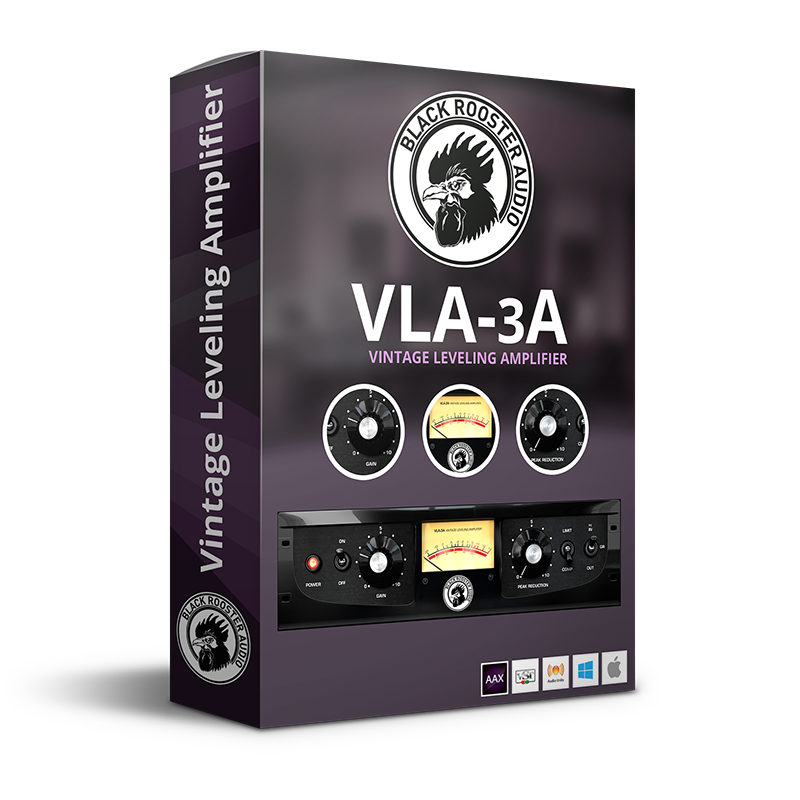
VLA-3A
Vintage Solid-State Opto Compressor
About the VLA-3A
Inspired by the Teletronix / UA LA-3A: the LA-2A's quicker, brighter cousin. The VLA-3A keeps the modelled T4B opto cell but wraps it in a discrete solid-state audio path, so it grabs faster and sits forward in a way the tube-based LA-2A never quite does.
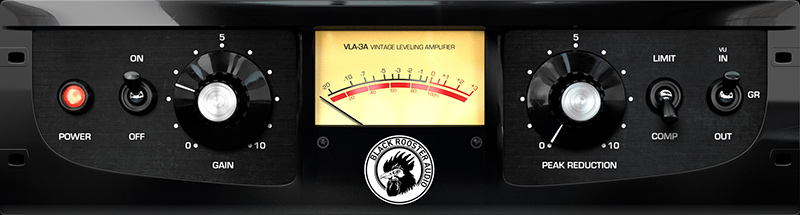
The VLA-3A is a vintage opto compressor that solves a specific problem: you love the smooth, program-dependent feel of an optical unit, but the source is percussive and the LA-2A is just too slow to catch it. Where the LA-2A leans back, the VLA-3A leans in. Same two-and-a-switch layout — Peak Reduction, Gain, and a Limit/Compress mode toggle — but the response is snappier and the top end brighter, thanks to the solid-state amplifier and a high-frequency contour filter in the detection path. It's an opto with attitude.
The LA-3A: where opto met solid-state
When the LA-3A arrived in the early 1970s it took the optical attenuator idea from the LA-2A and dropped the tube amplifier in favour of discrete solid-state circuitry. The result was a leveling amplifier that kept the forgiving optical release but reacted faster and added a distinctive midrange push and high-frequency lift. We modelled the whole path with our real-time, SPICE-style circuit simulation: the input and output transformers, the discrete sidechain and audio-amplifier stages, the high-frequency contour filter network, and the T4B cell at the centre. The cell still behaves like an opto — level-dependent, self-adjusting — but everything around it now moves quicker and sounds brighter than its tube-driven sibling.
Sound and character: faster, brighter, mid-forward
The VLA-3A has a texture all its own. Its attack catches transients the LA-2A would sail past, so drums and plucked guitars keep their snap while still getting leveled. The high-frequency contour in the sidechain gives it a lively, present top end, and the discrete gain amplifier adds a subtle, musical saturation as you push the Gain knob — less of the round tube warmth of the LA-2A, more of a crisp, mid-forward edge. Set to Compress it glues nicely; flip to Limit and it grips harder for peak control. It's the opto you reach for when "smooth" also has to mean "quick".
Using the VLA-3A on vocals, drums and guitars
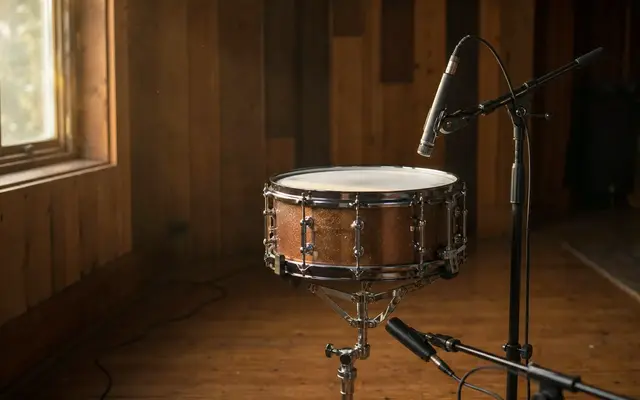
Vocals are the classic LA-3A move — the faster attack tucks consonants and breaths in tighter than a LA-2A, and the brightness keeps the take from getting dull under compression. On drums and room mics it's superb: dial in Peak Reduction and it brings up the ambience and glues the kit without smearing the transients. Electric and acoustic guitars love its mid-forward push, sitting them in the track with presence intact. When you want the slower, warmer, tube-flavoured leveling for sustained vocals and the mix bus, reach for the VLA-2A instead — or its expanded sibling the VLA-2A Mark II. And when a source needs genuine FET aggression and fast peak control, the VLA-FET is the tool.
VLA-3A Features
T4B opto cell in a solid-state path
The same optical attenuator concept as the LA-2A, but driven by a modelled discrete solid-state amplifier rather than tubes — so the VLA-3A keeps the forgiving optical release while reacting noticeably faster.
High-frequency contour filter
A modelled high-frequency contour network in the detection path gives the VLA-3A its signature bright, present top end and the mid-forward push that makes vocals and guitars cut without extra EQ.
Peak Reduction and Gain (0–10)
Two controls do the work. Peak Reduction sets how hard the cell compresses; Gain makes up level through the discrete audio amplifier and, pushed harder, adds a subtle, crisp saturation with a mid-forward edge rather than round tube warmth.
Limit / Compress mode
Toggle between a smooth Compress mode for musical leveling and a firmer Limit mode that clamps peaks harder — the two-position character of the original hardware.
Flexible metering
The VU meter monitors average input, gain reduction or output in dB, switchable between In / GR / Out. A readout of -14dB full scale in the plug-in equals a level of 0 dBu in the hardware.
Authentic circuit emulation
Our real-time, SPICE-type component-based circuit simulation captures the sound and feel of the analog counterpart in every nuance — transformers, discrete solid-state stages and the T4B cell all faithfully modelled.
SSE2-optimised code
DSP operations are pipelined on the SSE2 instruction set for high-performance operation, even under complex processing.
Auto-adjusted oversampling
A low-latency, linear-phase Dolph-Chebyshev polyphase design attenuates aliasing and auto-adjusts to your session's sample rate to save CPU while staying transparent.
HighDPI / Retina support
Crisp, high-pixel-density rendering on macOS and Windows for a sharp interface on modern displays.
VLA-3A Audio Demos
Both takes play in sync. Press FX to switch the plugin in and out without losing your place.
VLA-3A Examples & Videos
Industry Reviews

These 2 compressor plugins (the VLA-2A and 3A) are really, really good—very smooth, and they react a lot like the original hardware versions. In fact, I like the limiter part better than most….A really nice addition to the arsenal of compressor plugins out there.

I've always loved the hardware on vocals, bass, guitars and pretty much everything that needs well balanced dynamics and a thick tone. The VLA-3A does justice to all this, especially on how it pushes the mid-range forward adding thickness which is my favorite characteristic of this processor. After all these years without the hardware I'm happy to have the VLA-3A.

You can throw almost anything at this plug-in. The VLA-3A will grab it, tighten it up and bring it to the front. It’s amazing on vocals, guitars, horns and percussion. This compressor will be definitely my go-to for everything that needs to groove.
VLA-3A — Customer Reviews
EXCELLENT
I REALLY LOVE THIS PLUGIN!
Calidad garantizada
Uno de los mejores plug-ins, su rapidez de procesar y ser de los más eficientes en voces, lo mejor de lo mejor!
EXCELLENT
I REALLY LOVE THIS PLUGIN
EXCELLENT
REALY LOVE THIS PRODCT
Absolute
Muy buena emulación, muy buen plugin, gracias
Wow!
Ah no Chao!
Leave a Review
VLA-3A — Frequently Asked Questions
What hardware is the VLA-3A based on?
The VLA-3A is inspired by the Teletronix/UA LA-3A, the early-1970s leveling amplifier that paired an optical attenuator with a discrete solid-state audio path. It models the T4B cell, the transformers, the discrete amplifier stages and the high-frequency contour filter of the original.
What does the VLA-3A sound like and when should I use it?
It is a faster, brighter, mid-forward opto compressor. Use it on vocals for tight, present leveling, on drums and room mics to bring up ambience without smearing transients, and on electric or acoustic guitars to push them forward in the mix with presence intact.
How is the VLA-3A different from the VLA-2A?
Both are opto compressors, but the VLA-3A uses a discrete solid-state path instead of tubes, so it reacts faster and sounds brighter and more mid-forward. The VLA-2A (LA-2A) is slower and warmer, better for sustained vocals and gentle bus glue. Pick the VLA-3A for percussive, transient material.
Is the VLA-3A good for drums?
Yes. Its faster optical attack catches drum transients the slower LA-2A-style VLA-2A would miss, so it levels the kit and brings up room ambience while keeping the snap. It is a favourite for drum bus and room-mic compression where glue matters but punch must survive.
Which plugin formats and systems does the VLA-3A support?
The VLA-3A ships as AAX, VST, VST3 and Audio Units (AU) for both macOS and Windows, including native Apple Silicon support. It runs in all major DAWs. See the product manual for detailed system requirements.
Is there a free trial of the VLA-3A?
Yes. Registered users can create a free 14-day trial license from the license manager and demo the VLA-3A in full before buying. You only need a free Black Rooster Audio account to get started.
Read more about this


LA-3A is a registered trademark of Universal Audio, Inc. Black Rooster Audio's products, specifically, the VLA-3A Vintage Leveling Amplifier, is developed by Black Rooster Audio, based on its own modeling techniques. Universal Audio, Inc. has neither endorsed nor sponsored Black Rooster Audio's products in any manner, nor licensed any intellectual property for use in this product.