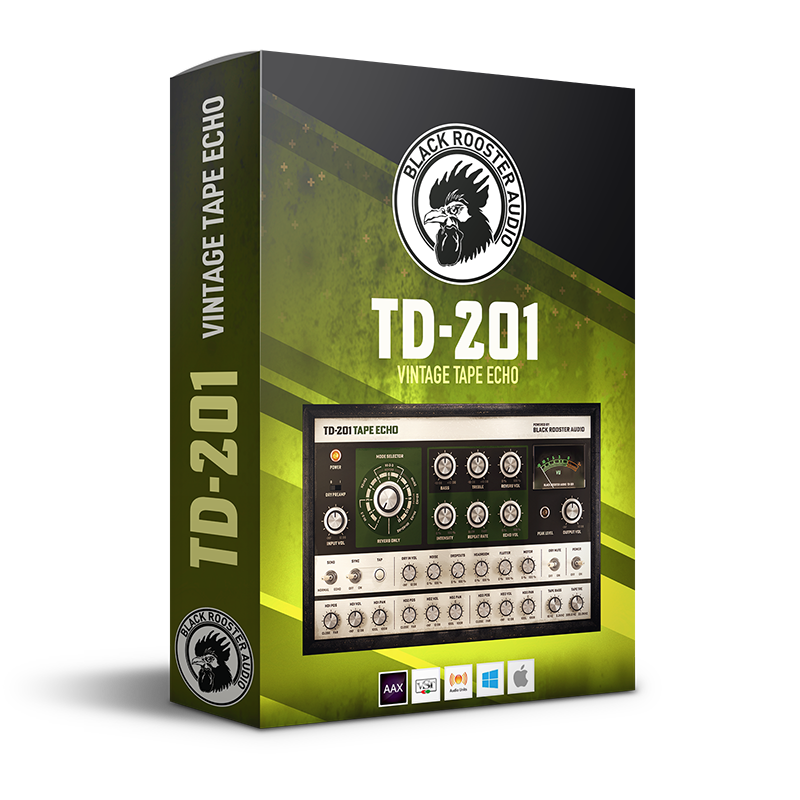
TD-201
Vintage Multi-Head Tape Echo
About the TD-201
Inspired by the Roland RE-201 Space Echo: the free-floating quarter-inch tape loop and spring reverb that built dub, roots reggae and half a century of guitar and synth records.
The TD-201 is a vintage tape echo — a multi-head delay that behaves like the tape machine it was modelled on, not like a clean digital line. You dial in a delay time, layer up the playback heads, then push the feedback until the whole thing tips into self-oscillation and takes off. Warm, a little unstable, always musical. If you have ever wanted the sound of a Space Echo without hunting down a working unit, re-splicing the tape loop and babysitting a temperamental motor, this is it.
From Echoplex to the Roland RE-201 Space Echo
Tape echo was born out of the 1950s studio-effects boom, alongside the first guitar amps and electric organs. Early units like the Echoplex and the Copicat sounded gorgeous but were famously fragile — prone to damage the moment you loaded them into a van. In the late 1960s Ikutaro Kakehashi and Hammond started experimenting with multi-head tape echos, and one design housed a free-floating 1/4-inch tape loop and a spring reverb inside a rock-solid chamber. That machine became the Roland Space Echo RE-201, a best-seller and the reference every tape delay since has been measured against. We rebuilt its behaviour — the tape response, the head routing, the spring — as a living system rather than a static delay line.
Three heads, self-oscillation and a spring reverb
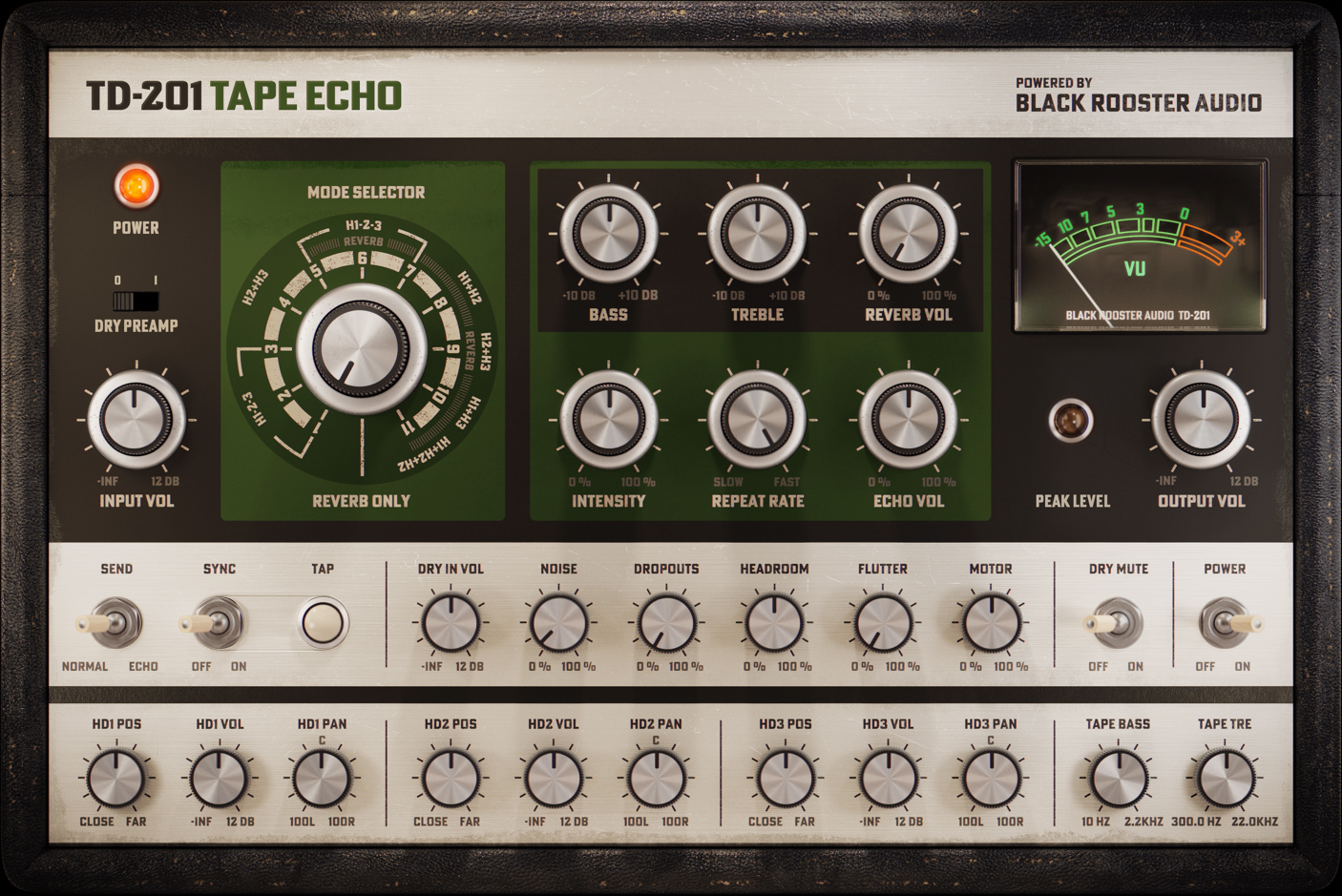
The 12-position Mode Selector is where the character lives. It routes the three playback heads (H1, H2 and H3) and the spring reverb exactly as the original did: four head-only modes (H1, H2, H3, H2+H3), seven modes that add the spring reverb (right up to H1+H2+H3+Reverb), and a reverb-only setting. Ride the Feedback and Repeat Rate (labelled "Repeat R") controls — the plugin's take on the RE-201's Intensity — and the regeneration climbs until the echo tips into self-oscillation, that runaway "diving into space" sound. Each head has its own Pos, Lvl and Pan, so you can spread repeats across the stereo field or tuck them behind the source. A 2-band Bass/Treble EQ (±6dB each, hinged around 95Hz and 650Hz) shapes the output, separate Tape Bass and Tape Treble controls set the tape's own tone, Reverb Volume feeds the convolution spring, and Dry Pre runs your dry signal through the Class-A preamp for subtle saturation. Flip the Dry Mute switch on and the direct signal drops out, passing only the repeats and self-oscillation — the classic dub mixing-desk move.
Using the TD-201 on guitars, synths and vocals
On surf and dub guitar, a mid setting on the Mode Selector with a slow Repeat Rate gives you that slapback-into-haze bloom. On synths and arpeggios, crank Feedback and let it self-oscillate, then ride Repeat Rate by hand for pitch-bending riser effects. On vocals, a single-head repeat with a little spring reverb sits a lead back without washing it out. Want it grubbier? Bring up the Floor, Dropouts, Wow Flutter and Motor Acc controls to add tape hiss and hum, level dropouts, and speed instability, and push Headroom to drive the per-repeat saturation harder. Lo-fi trick: set the Mode to H1, pull the H1 Pos knob to its minimum for a near-zero delay, then work only the Motor Acc, Wow Flutter, Headroom, Dropouts and Floor — instant cassette effect. And if you want tape warmth on the source itself rather than in the repeats, reach for our tape saturation plugin, Magnetite.
TD-201 Features
12-position Mode Selector
A single 12-step selector routes the three playback heads and the spring reverb, just like the RE-201: four head-only modes (H1, H2, H3, H2+H3), seven modes that add the spring reverb, and a reverb-only setting. One knob takes you from a single clean repeat to dense, overlapping rhythmic echoes.
Per-head Pos, Lvl and Pan
Each of the three heads gets its own Pos (position), Lvl (level) and stereo Pan. That is nine parameters of detailed control over how your repeats spread across time and the stereo field.
Feedback, Repeat Rate and self-oscillation
The Feedback control (the plugin's Intensity) feeds each head's output back into the recording preamp; the Repeat Rate ("Repeat R") sets the tape speed. Push Feedback and the echo dives into runaway self-oscillation — the RE-201's signature "space" sound — that you can ride by hand for pitch-warping risers.
Headroom-controlled per-repeat saturation
Every repeat passes a modelled Class-A record preamp with error-function tape saturation. The Headroom knob sets how hard each pass clips, so you can keep repeats clean or let them thicken and distort the longer they regenerate.
Sync and Tap Tempo
Lock the tape speed to your project tempo with the Sync switch — it snaps the delay to musical divisions — or feed it manually with Tap Tempo so the echo follows the rhythm you give it, no hunting for milliseconds.
Dry Mute and Dry Pre
Switch Dry Mute on and the direct signal drops out, passing only repeats and self-oscillation for classic dub moves. Set Dry Pre to Pream to route the dry signal through the Class-A preamp for subtle saturation, or Clean to keep it untouched.
Convolution spring reverb and dual tone controls
A convolution-based spring reverb (Reverb Volume, fed from a real spring impulse response) adds depth to the wet path. A 2-band Bass/Treble EQ (±6dB, at 95Hz and 650Hz) shapes the output, while separate Tape Bass and Tape Treble controls voice the tape itself.
Tape-machine imperfections: Floor, Dropouts, Wow Flutter, Motor Acc
Dial in tape hiss and 60Hz hum (Floor), level dropouts, wow-and-flutter modulation and motor-speed instability (Motor Acc) for authentic vintage grit — or zero them out for a clean, controllable delay.
Authentic circuit emulation
Our real-time, component-based modelling captures the tape response, head routing, Class-A preamps and spring reverb of the analog counterpart as a living system, not a static delay line — so feedback and saturation interact the way the hardware does.
Auto-adjusted oversampling
The tape and feedback stages run oversampled, with the factor auto-adjusted to your session's sample rate, so aliasing stays down even when the echo self-oscillates into the high end.
Apple Silicon native and HighDPI support
Runs natively on Apple Silicon and Intel Macs as well as Windows, with crisp high-pixel-density rendering for a sharp interface on modern displays.
TD-201 Audio Demos
Both takes play in sync. Press FX to switch the plugin in and out without losing your place.
TD-201 — Frequently Asked Questions
What hardware is the TD-201 based on?
The TD-201 is inspired by the Roland RE-201 Space Echo, the multi-head tape echo Ikutaro Kakehashi's Roland built around a free-floating 1/4-inch tape loop and a spring reverb. We modelled its tape response, three-head routing and spring reverb as a living system rather than a static delay.
What does the TD-201 sound like and when should I use it?
Warm, slightly unstable analog echo with a spring reverb tail. Use it for dub and roots reggae, surf and psychedelic guitar, synth and arpeggio risers, and slapback on vocals. Push Intensity for runaway self-oscillation, or add flutter and noise for lo-fi tape grit.
How does the 12-position Mode Selector work?
The Mode Selector has 12 positions that route the three playback heads (H1, H2, H3) and the spring reverb, like the original RE-201: four head-only modes, seven modes that add reverb, and a reverb-only setting. Each head also has its own Pos, Lvl and Pan for detailed control.
Can the TD-201 self-oscillate for that "space" effect?
Yes. Raise the Feedback control (the plugin's Intensity) until the echo tips into self-oscillation — the RE-201's signature runaway "diving into space" sound. Ride the Repeat Rate by hand while it oscillates for pitch-bending riser and dub effects.
How do I get a lo-fi cassette effect from the TD-201?
Set the Mode to H1 and pull the H1 Pos knob to its minimum for a near-zero delay, then work only the Motor Acc, Wow Flutter, Headroom, Dropouts and Floor controls. With no audible repeat left, those tape-machine imperfections give you a convincing lo-fi cassette sound.
Which plugin formats and systems does the TD-201 support?
The TD-201 ships as AAX, VST, VST3 and Audio Units (AU) for both macOS and Windows, including native Apple Silicon support. It runs in all major DAWs. See the product manual for detailed system requirements.
Is there a free trial of the TD-201?
Yes. Registered users can create a free 14-day trial license from the license manager and demo the TD-201 in full before buying. You only need a free Black Rooster Audio account to get started.